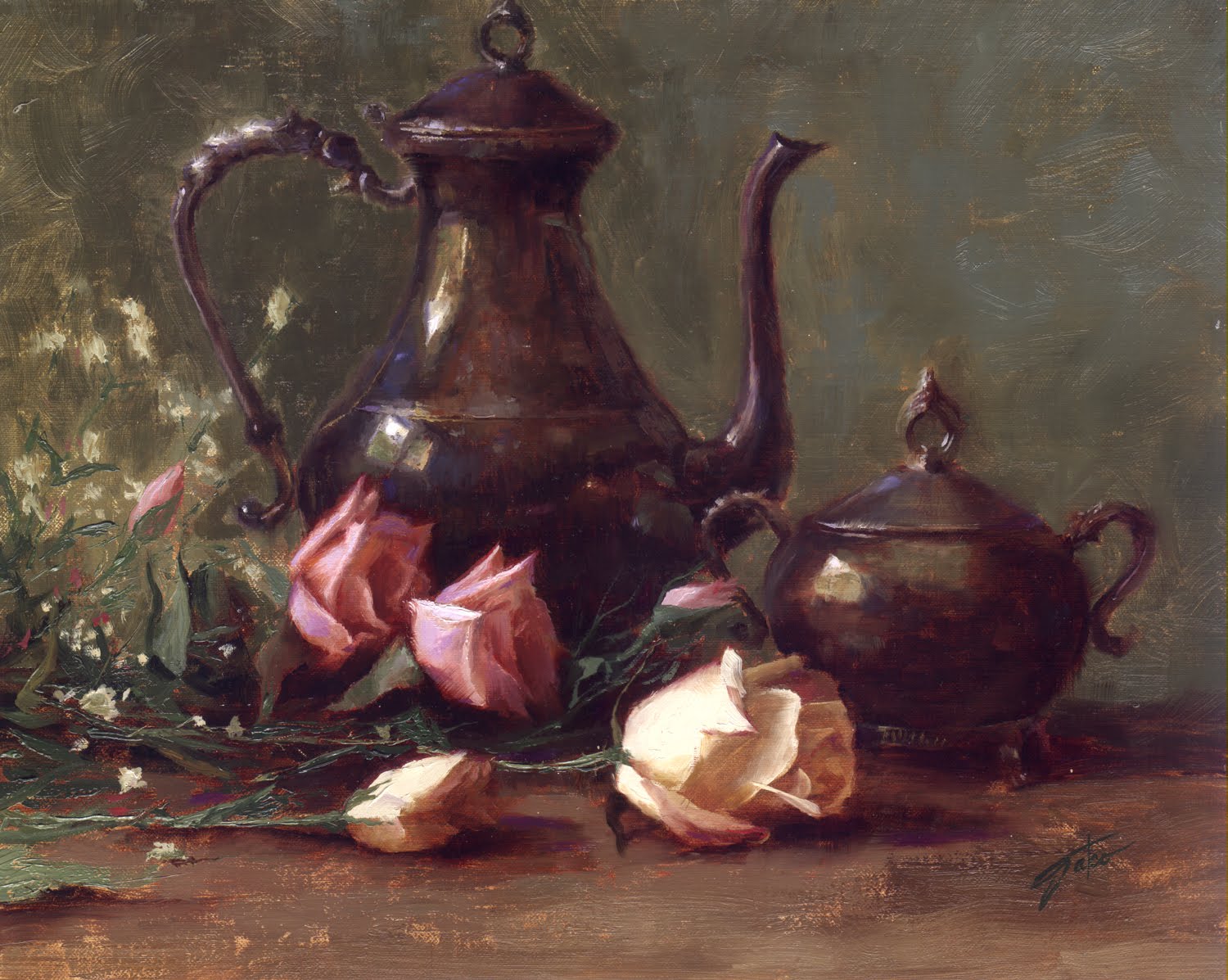
Some of you, both artists and collectors, may notice that after a short period of time your oil painting may get a flat, dull or even blotchy look. This usually happens during the drying process, which for oil paintings may take years to totally complete. The surface of an oil painting can vary in the amount of actual oil it contains. The areas with less oil tend to dry more flat. This is why it’s always good advice to paint thick over thin, or fat over lean; meaning the top layer of paint should contain more oil than the lower layers, otherwise the lower layers will suck the oil out of the upper layers causing a dull look. Being an artist I can say this principle is not always easy to maintain, especially when painting en plein air.
Two methods can be used to bring the color, depth and gloss back to an oil painting. The first is called oiling out. This is basically using a medium or half linseed or walnut oil, and half mineral spirits, and gently brushing it on the surface of the painting. I recommend using Gamblin’s Galkyd medium in place of linseed oil as it dries within a day and won’t yellow. You must make sure the surface is completely dry to the touch otherwise the solvent will cause the wet layers of painting to run all over the surface. The second is to use varnish. Retouch varnish, along with oiling out can be used during the intermediate stages of working on a painting to bring back the dull spots. Finishing varnish or non-retouch varnish is a final and usually permanent varnish that cannot be painted over or removed. And you must wait at least 6 months to a year before applying this type of varnish. If I have a painting long enough I like to both give it a final coat of oil and then varnish, though only one or the other will suffice.
If you have purchased an oil painting at a plein air event you may have noticed that is doesn’t look as colorful or glossy as when you first brought it home. This is most likely because the painting was still wet during the event, and the artist couldn’t add any oil or varnish to it due its wetness. If it has been less than 6 months and you can’t wait to restore those colors the best thing to do is purchase some retouch varnish along with a soft bristle brush from your local art supply store (Michaels and AC Moore will have these items) and in a well-ventilated area gently brush a light coat of varnish on the painting. If it has been more than 6 months you can use regular varnish. You can do both as long as you wait at least 6 months for the final varnish. If the paint is really thick you may want to wait a year. For artists I recommend Gamblin’s Gamvar for a final varnish as this varnish can be removed in case you ever need to alter something on the painting.
Some of you, both artists and collectors, may notice that after a short period of time your oil painting may get a flat, dull or even blotchy look. This usually happens during the drying process, which for oil paintings may take years to totally complete. The surface of an oil painting can vary in the amount of actual oil it contains. The areas with less oil tend to dry into a more flat looking surface. This is why it is always good advice to paint thick over thin, or fat over lean; meaning the top layer of paint should contain more oil than the lower layers, otherwise the lower layers will suck the oil out of the upper layers causing a dull look. Being an artist I can say this principle is not always easy to maintain, especially when painting en plein air.
Two methods can be used to being the color, depth and gloss back to an oil painting. The first is called oiling out. This is basically using a medium or half linseed or walnut oil, and half mineral spirits, and gently brushing it on the surface of the painting. You must make sure the surface is completely dry to the touch